


GAME RULES
Objective of the game
The objective of the Biodiversity Game is to collect the highest number of cards by forming the “biodiversity pile,” with all the species the player was able to protect.
At the end of the game, the player with the most species accumulated in their pile wins.
Game components
The game includes:
| Type of card | Quantity | Function |
| Species | 46 | Comparative cards of the species represented in the game. |
| “Take-All” | 2 | Special cards that allow players to capture cards from another player’s biodiversity pile. |
| Characteristic | 6 | Cards that define which species characteristic will determine the winner of the round. |
Setup
-
Shuffle the species cards and Take-All cards into a single deck and place them face down in the center. This will be the larger deck.
-
Shuffle the characteristic cards into a smaller separate deck.
-
Each player initially receives 5 cards from the larger deck. The remaining cards stay in the draw pile.
-
The first round begins with the player to the left of the person who dealt the cards.
How a round works
Follow the steps below during each round:
1. Drawing the playable characteristic
A characteristic card is drawn from the smaller deck by the player. It determines which species characteristic will be used for that round’s challenge:
- Size
- Speed
- Lifespan
- Adaptability
- Feeding Position
- Intelligence
2. Choosing a card
The player who starts the round chooses, from the cards in their hand, the one they believe is strongest for the selected characteristic.
Example: If the selected characteristic is Speed, the player should choose an animal card with a high Speed rating and reveal it to the other players by placing it face up on the table.
The remaining players do the same, proceeding clockwise.
3. Comparing the cards
The species cards played on the table are compared according to the selected characteristic.
The player whose species has the highest value for that characteristic wins the round.
Tie-breaking rules
If two or more species are tied, apply the following rules:
- The first tie-breaker is the species’ rarity. The tied cards are compared again using their rarity level.
- If the tie remains, draw a new characteristic card and compare the tied species again.
- Repeat the previous step until a winner is determined.
Round scoring
The winner collects all the cards played on the table during that round and places them in their Biodiversity Pile.
These cards do not return to the player’s hand.
Drawing new cards
At the end of each round, each player draws one card from the draw pile, and a new round begins.
End of the game
The game ends when at least one player can no longer draw a card from the draw pile.
When this happens:
- The game immediately ends.
- Any cards still in the players’ hands are automatically added to their Biodiversity Piles.
- Each player counts the cards accumulated in their Biodiversity Pile.
Winner
At the end of the game, the player with the highest number of species (cards) in their Biodiversity Pile wins.
In the event of a tie in the final score, players may use an agreed-upon tie-breaking method, such as:
- The highest number of rare species (three-star cards) in the Biodiversity Pile.
- The highest number of cards with a specific characteristic, such as Size or Intelligence.
- A final tie-breaker round played only by the tied players.
Special "Take-All" card
Take-All cards are special cards shuffled into the species draw deck. When using one, the player must:
- Choose one of the two criteria presented on the card.
- Select another player.
- Take from that player’s Biodiversity Pile all cards that match the chosen criterion.
- Verify the selected cards and place them into their own Biodiversity Pile.
- Draw one additional card.
Important:
Only one player per round may use a Take-All card.
When a Take-All card is played, all species cards that were already on the table return to their respective players’ hands.
The player who used the Take-All card then draws the next Characteristic card, and a new comparison round begins using the selected characteristic.
Final agreements
This manual presents the main rules of the game.
If a new situation arises during gameplay, players may discuss it and agree on the best way to proceed.
The most important thing is to play with respect, cooperation, and care for biodiversity.
PLAYABLE CHARACTERISTICS

Size
Shows how large an animal can grow.
Large animals need more food and space. Small animals can hide more easily and move through narrow places. This affects how they hunt, escape predators, and survive.
- Very Small: Fits in the palm of a hand and hides among leaves, bark, and small holes.
- Small: About the size of a large hand; enters burrows and moves quickly through vegetation.
- Medium: Similar in size to a small dog; leaves visible tracks and uses short trails.
- Large: Comparable to a wild pig; requires more territory and often breaks branches and leaves while moving.
- Very Large: The size of a cow or larger; leaves strong footprints and creates paths through the forest.
Remember: From the smallest to the largest, all animals play an important role in the forest and must be protected.

Speed
Shows how quickly an animal moves to hunt, escape danger, and travel through its environment.
Fast animals can avoid threats and reach food more easily. Slower animals rely on camouflage, group behavior, and knowledge of their surroundings to survive.
- Very Slow: Moves slowly and depends on hiding places and patience.
- Slow: Moves at a relaxed pace and protects itself with burrows, shells, or spines.
- Moderate: Runs well over short distances.
- Fast: Makes quick bursts of speed, escapes danger, and hunts with agility.
- Very Fast: Travels long distances in a short time and can surprise both prey and predators.
Remember: Regardless of speed, all animals are important and deserve protection.

Lifespan
Shows how many years an animal can live.
Lifespan varies greatly among animals. Species that live for many years usually take longer to reproduce and need safe habitats for extended periods. Species with shorter lifespans reproduce more quickly to maintain their populations.
- Very Short: Lives from a few months up to 1 year.
- Short: Lives from 1 to 3 years.
- Moderate: Lives from 4 to 10 years.
- Long: Lives from 11 to 30 years.
- Very Long: Can live for more than 30 years.
Remember: Protecting any animal means protecting the life of its habitat and the future of those who depend on it.

Adaptability
Shows how well an animal can withstand changes in its environment, such as heat, drought, or alterations in the forest.
When the climate changes and the forest is altered, some animals can adapt by changing their behavior and routines. Others depend on well-preserved habitats with shade, clean water, and suitable food sources.
- Very Low: Quickly suffers from heat, drought, and habitat changes.
- Low: Can tolerate some changes but depends on very stable conditions.
- Moderate: Adjusts its activity patterns and routes and can withstand environmental changes for a period of time.
- High: Adapts to water shortages and forest changes without disappearing from the area.
- Very High: Thrives in many types of environments and recovers well after major environmental changes.
Remember: Every species helps sustain life within its ecosystem, which is why all species deserve protection.

Feeding position
Shows the relationship between living organisms through feeding interactions—in other words, who eats whom.
A species’ feeding position describes its role in the food chain. When one species disappears, some animals lose a food source while others may become overabundant, disrupting the balance of the ecosystem. Without balance, the forest can become unhealthy.
- Producer: Produces its own food, such as plants and algae.
- Primary Consumer: Feeds on plants, fruits, seeds, or algae.
- Secondarery Consum: Feeds on animals that eat plants, such as insects and small animals.
- Tertiary Consumer: Hunts other carnivores and helps regulate populations.
- Apex Predator: Has few natural enemies and strongly influences the balance of the ecosystem.
Remember: The food chain is like a web of life. When balanced, it helps keep the forest healthy.

Intelligence
Shows an animal’s ability to learn, adapt, and solve challenges in nature.
More intelligent animals find new ways to obtain food and avoid traps. This helps them survive near people, farms, rivers, and also in dense forests.
- Low: Repeats the same routes and habits, showing little change in behavior.
- Low to Moderate: Learns slowly and imitates what it observes, but with limitations.
- Moderate: Adjusts some routes and activity schedules when conditions change.
- High: Solves problems, uses strategies, and learns quickly.
- Very High: Develops new solutions, teaches others, and adapts to major changes.
Remember: Regardless of intelligence, all animals are important and deserve protection.
NON-PLAYABLE CHARACTERISTICS
Common name
Helps identify a species within the community.
A common name is the name people use in everyday life to refer to an animal. These names are passed down through generations within local communities. They may vary from one region to another, meaning the same animal can have different common names depending on the location.
Examples:
- Jaguar: Common name used for the large spotted feline found in forests.
- Scarlet Macaw: Common name used for large, colorful birds often seen in flocks.
- Arapaima: A large fish commonly found in the rivers of the Amazon.
Remember: Knowing and using the names of animals helps value the forest, strengthen community knowledge, and protect biodiversity.
Scientific name
Used by science to identify a species accurately.
A scientific name is a standardized name that does not change from one region to another. It is used worldwide to refer to the same species without confusion.
Each species has a unique scientific name. This helps researchers study species, compare information, record monitoring data, and support conservation efforts.
Examples:
- Jaguar: Panthera onca
- Scarlet Macaw: Ara macao
- Arapaima: Arapaima gigas
Remember: A scientific name shows that every species is unique. However, regardless of the name it carries, every animal has value and deserves protection.

Rarity
Shows how difficult it is to find or observe an animal in nature.
Some animals are rare because their populations are small. Others are seldom seen because they avoid people or live in hidden areas. Species that are difficult to find require greater attention and protection.
Rarity Levels:
- Easy to Find: Occurs in many places and in large numbers.
- Moderate: Can be found, but not consistently.
- Difficult to Find: Rare, elusive, or lives hidden from view.
Remember: Both easily observed and rarely seen animals are important for maintaining the balance of the forest.

Protection
Shows how urgently a species needs protection to avoid extinction.
The cards display the most critical conservation status assigned by either the IUCN or ICMBio.
Scientists evaluate the extinction risk of each species. The higher the risk, the more urgent the need for protection. Hunting, deforestation, wildfires, pollution, and the loss of food and shelter all increase this risk.
Conservation Status Categories:
- EX – Extinct: No living individuals remain.
- EW – Extinct in the Wild: Survives only in captivity, cultivation, or through reintroduction programs.
- CR – Critically Endangered: Faces an extremely high risk of extinction.
- EN – Endangered: Faces a very high risk of extinction.
- VU – Vulnerable: Faces a high risk of extinction.
- NT – Near Threatened: Close to qualifying as a threatened species.
- LC – Least Concern: Currently at low risk of extinction.
- DD – Data Deficient: Insufficient information is available to assess the species.
- NE – Not Evaluated: Has not yet been assessed.
Remember: Extinction is forever. Protecting species, especially threatened ones, means protecting forests, rivers, and the future of local communities.

Habitat
Shows where an animal lives best in nature.
A habitat is the place where an animal finds food, shelter, and suitable conditions to reproduce. Each species depends on the right environment to survive. When that environment is destroyed, the animal loses its home and becomes more vulnerable. Habitat Types:

Forest: Lives among trees, vines, and vegetation, using shade and natural shelters.

Aquatic: Lives in water or along its edges, near streams, floodplains, and lakes.

Secondary Forest (Capoeira): Lives in open fields, regenerating forests, and areas with fewer trees.
Remember: Protecting habitats means protecting animals, rivers, and the balance of the forest.

Diet
Shows the animal’s preferred type of food.
Diet helps explain an animal’s role in nature. It provides clues about where the animal lives and how it survives. Changes in the forest can affect food availability. Every animal has its own feeding habits. Some of the most common dietary categories are:

Frugivore: Feeds mainly on fruits.

Herbivore: Feeds on leaves, fruits, and seeds.

Carnivore: Feeds on other animals, such as mammals, birds, and fish.
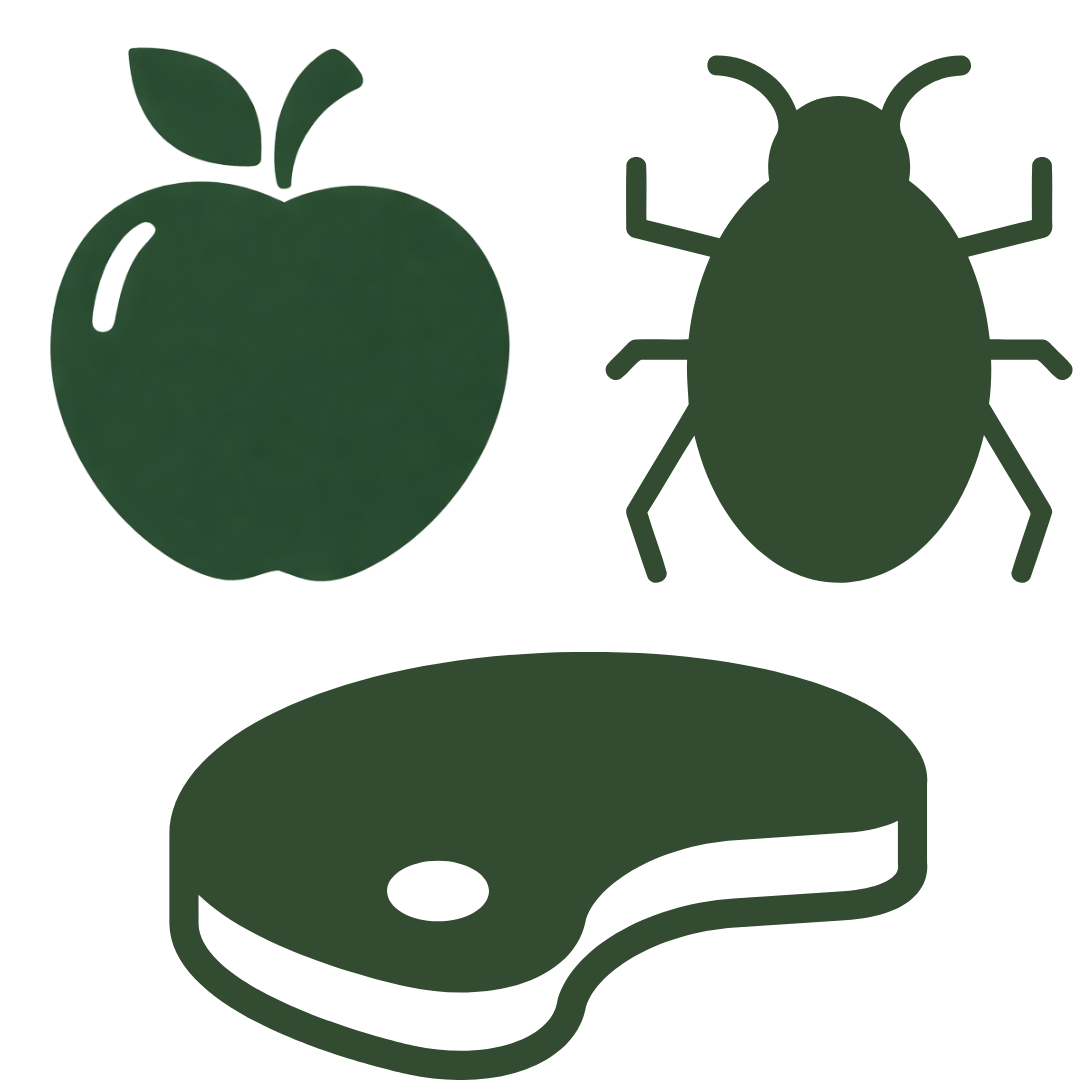
Omnivore: Feeds on both plants and animals.
Insectivore: Feeds on insects such as ants, larvae, and other small invertebrates.
Remember: What an animal eats helps maintain the balance and health of the forest ecosystem.
Specialization
Shows an animal’s main “job” in the forest and how dependent it is on specific environmental conditions.
Some animals perform highly specialized ecological functions, such as dispersing large seeds, controlling insect populations, modifying the soil, or regulating prey populations. When the forest changes, the most specialized species are often the first to suffer and may disappear from the area.
Main Specializations in the Game:
- Seed Dispersal and Forest Regeneration: Spreads seeds and helps new trees grow, maintaining biodiversity.
- Insect Control and Tree Health: Feeds on ants, termites, larvae, and other insects, helping prevent ecological imbalances.
- Ecosystem, River, and Soil Engineers: Disturbs and enriches the soil, creates burrows and wallows, influences floodplain environments, and helps circulate nutrients.
- Social and Generalist Species: Lives in groups, consumes a wide variety of foods, and performs multiple ecological functions.
- Predators and Population Balance: Regulates prey populations and helps prevent overpopulation; their presence often indicates a healthy ecosystem.
Remember: Every specialization plays an important role in maintaining the balance of the forest. Even the most common or the rarest animals deserve protection and conservation.
Learn more about the project that helps protect this biodiversity here.